Healthcare is making remarkable advances in personalized care, thanks in part to artificial intelligence and other innovations. But some of the most important ways…
I have frequent conversations with leaders regarding change. The term “change is hard” is commonly heard. At times, we can underestimate just how hard…
When healthcare leaders think about advanced practice clinicians (APCs), the conversation often starts with staffing. Where do we have a gap? Where do we need…
I have many teachers. Chester Elton and Adrian Gostick are two of them. They are best-selling authors, presenters, and coaches. Chester has presented in Pensacola,…
Healthcare doesn’t need a fresh start—it needs a thoughtful rewire. Rewiring Healthcare: Foundation to Future brings together senior leaders to step back…
Are you working in your business or on your business? This question is in the book The E-Myth Revisited by Michael E. Gerber. For most people, the answer is “in the business.” This is the day-to-day work leaders do. What is meant by working on your business? It is taking time to step back and look at such items as the standard operating procedures, processes that can be improved, skills that can be improved in yourself and others, etc. When I worked at…
Last week we talked about how inexperience impacts your organization. The next question becomes just as important: What are you doing to help those new employees stay long enough to become experienced? The research is clear and has been for decades: When looking at employee departures, the first year is when about 30 percent take place—especially in work areas in which the new hire works with different people. This is very true in healthcare and hospitality.…
In my book, Karma Doesn’t Need My Help: 11 Weekly Lessons to Leadership Success and Peace, Week 2 references one of the most damaging phrases ever for healthcare leaders: “I already knew that.” When a leader uses that phrase, the information flow from others slows or stops as people believe the leader already knows everything. Why? The leader keeps telling them that. This past week, I realized there is a second-most-damaging phrase leaders should avoid.…
Today, due to Baby Boomer retirements and more workplace options, the number of new workers has risen. Inexperienced employees have a huge impact on an organization. This lack of experience can show up in a number of places: from customer service to processes that need to be followed to mistakes and other outcomes. It is the nature of newer people. Even with great onboarding, a person needs time to adjust to working in a different environment. Yes,…
In healthcare, and especially in the emergency department, a lot can happen in a single moment. Sometimes it’s a moment that adds weight to an already-heavy day. A rushed comment. A missed thank-you. A look that signals impatience instead of support. For a clinician already carrying a “backpack” full of stress, fatigue, and responsibility, even a small negative interaction can become another rock added to the load. Over time, these moments accumulate and can quietly…
My friend Marv is near the end of his life on earth. By the time this is published and posted, he may have already ascended to heaven. I met Marv 44 years ago when I entered the rooms of recovery. Marv must have known how scared I was for he quickly embraced me. I have never had a day in recovery in which Marv was not a part of my life. He loves unconditionally. As…
A quiet truth sits beneath every workforce conversation in healthcare: Retention doesn’t begin when someone resigns, but in the everyday experience of work. I was reminded of this recently while reading the latest workforce research from the National Council of State Boards of Nursing (NCSBN). The findings put language around something many leaders already sense: People don’t disengage suddenly. They disengage gradually, in the small moments when work stops feeling sustainable or supported. We often treat retention as a…
Repetition can be a good thing. If you follow my work, hardwiring is a word you are likely familiar with. It’s how I describe systems and behaviors that are in place to create consistency. Hardwiring is a good thing. Yet, it doesn’t mean that what we hardwire stays in place forever. Dan Collard and I wrote the book Rewiring Excellence: Hardwired to Rewired on this subject. When we rewire, we don’t change what is working. We take a fresh…
Healthcare leaders are navigating unprecedented pressure: staffing shortages, burnout, rapid technological change, and rising expectations from patients and teams alike. In this environment, leadership cannot rely on authority, position, or process alone. How leaders show up and how they connect with people matters more than ever. In a recent Healthcare Plus Podcast conversation, Dan Collard spoke with Kay Kennedy, co-founder of uLeadershipÒ, about the evolution of Human-Centered Leadership in HealthcareÒ and what leaders can expect…
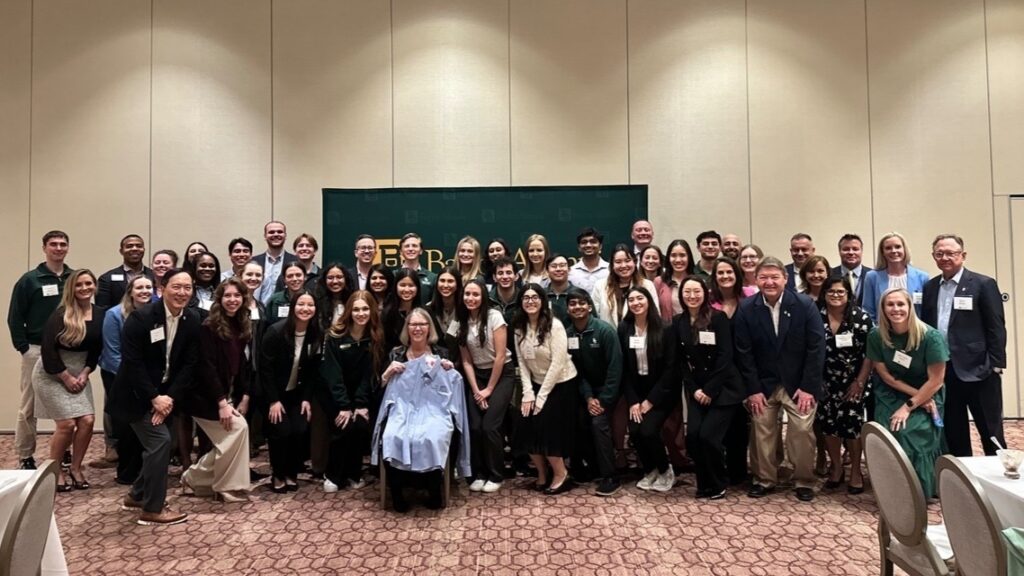
In healthcare today, headlines often highlight workforce shortages, financial pressures, regulatory complexity, and the many stressors facing healthcare organizations—realities that are certainly present. When asked about the future of healthcare, my answer is: I’m optimistic. That optimism comes from spending time with the people who work in healthcare every day—physicians, nurses, administrators, and other vital people who dedicate their lives to serving others. It is easy to be hopeful when speaking with healthcare administration students,…