A quiet truth sits beneath every workforce conversation in healthcare: Retention doesn’t begin when someone resigns, but in the everyday experience of work. I was…
Healthcare leaders are navigating unprecedented pressure: staffing shortages, burnout, rapid technological change, and rising expectations from patients and teams alike. In this environment, leadership…
In healthcare today, headlines often highlight workforce shortages, financial pressures, regulatory complexity, and the many stressors facing healthcare organizations—realities that are certainly present. When…
Healthcare organizations are asking more of their people than ever before. Complexity is up. Experience levels are down. The pace is relentless. And while…
Feedback. It’s something all people say they value. However, some ways of collecting it are more effective than others. I attend many meetings and presentations in which the leader asks…
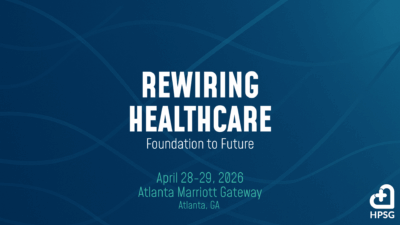
Healthcare doesn’t need a fresh start—it needs a thoughtful rewire. Rewiring Healthcare: Foundation to Future brings together senior leaders to step back…
In healthcare, and especially in the emergency department, a lot can happen in a single moment. Sometimes it’s a moment that adds weight to an already-heavy day. A rushed comment. A missed thank-you. A look that signals impatience instead of support. For a clinician already carrying a “backpack” full of stress, fatigue, and responsibility, even a small negative interaction can become another rock added to the load. Over time, these moments accumulate and can quietly…
My friend Marv is near the end of his life on earth. By the time this is published and posted, he may have already ascended to heaven. I met Marv 44 years ago when I entered the rooms of recovery. Marv must have known how scared I was for he quickly embraced me. I have never had a day in recovery in which Marv was not a part of my life. He loves unconditionally. As…
A quiet truth sits beneath every workforce conversation in healthcare: Retention doesn’t begin when someone resigns, but in the everyday experience of work. I was reminded of this recently while reading the latest workforce research from the National Council of State Boards of Nursing (NCSBN). The findings put language around something many leaders already sense: People don’t disengage suddenly. They disengage gradually, in the small moments when work stops feeling sustainable or supported. We often treat retention as a…
Repetition can be a good thing. If you follow my work, hardwiring is a word you are likely familiar with. It’s how I describe systems and behaviors that are in place to create consistency. Hardwiring is a good thing. Yet, it doesn’t mean that what we hardwire stays in place forever. Dan Collard and I wrote the book Rewiring Excellence: Hardwired to Rewired on this subject. When we rewire, we don’t change what is working. We take a fresh…
Healthcare leaders are navigating unprecedented pressure: staffing shortages, burnout, rapid technological change, and rising expectations from patients and teams alike. In this environment, leadership cannot rely on authority, position, or process alone. How leaders show up and how they connect with people matters more than ever. In a recent Healthcare Plus Podcast conversation, Dan Collard spoke with Kay Kennedy, co-founder of uLeadershipÒ, about the evolution of Human-Centered Leadership in HealthcareÒ and what leaders can expect…
In healthcare today, headlines often highlight workforce shortages, financial pressures, regulatory complexity, and the many stressors facing healthcare organizations—realities that are certainly present. When asked about the future of healthcare, my answer is: I’m optimistic. That optimism comes from spending time with the people who work in healthcare every day—physicians, nurses, administrators, and other vital people who dedicate their lives to serving others. It is easy to be hopeful when speaking with healthcare administration students,…
There is no shortage of ideas out there. Read a book, attend a conference, or log onto LinkedIn, and we walk away with plenty of inspiration. Execution is where the struggle can be. Why is that? If we know what we need to do (or at least what has worked for others), why do we have trouble, well, doing it? There are barriers, external and internal. One of the biggest barriers is perfectionism. People don’t like to…
Healthcare organizations are asking more of their people than ever before. Complexity is up. Experience levels are down. The pace is relentless. And while healthcare is filled with strong, resilient professionals, that strength often comes at a cost. In a recent Healthcare Plus Podcast conversation, Dan Collard spoke with Regina Shupe about her two main-stage sessions at the upcoming Rewiring Healthcare: Foundation to Future conference (April 28–29, Atlanta). Together, they explore why caring for caregivers…
As I watched the Winter Olympics last month, I realized the Games have a lot to teach us about making healthcare better. These amazing athletes reminded me that greatness has as much to do with mindset as it does with talent. Behind every flawless routine and podium finish is a coach: watching closely, refining technique, making small adjustments the athlete may not even notice. And Olympic success depends on the willingness to be coached, corrected,…
Feedback. It’s something all people say they value. However, some ways of collecting it are more effective than others. I attend many meetings and presentations in which the leader asks if there are any questions, and very few, if any, hands go up. It is no surprise that people tend to be cautious about speaking up in this situation. After a pause or someone’s finally asking a very non-threatening question, the session comes to an end. There are some typical ways to get feedback via surveys. They can happen after a…