

I recently had the privilege of delivering the commencement address at Franciscan Missionaries of Our Lady University. I found myself thinking about all the work we’ve been doing around generational issues. In Genfluence: How to Lead a Multigenerational Workforce, which I coauthored with Dr. Katherine Meese, we make the case that while people tend to focus on the differences between age groups, we’re all more alike than we realize. As I was speaking to this graduating class, this truth was really brought home to me: I was happy to see both students and parents leaning in!
The question I asked every graduate in that room is worth asking at any stage: What’s your “next”? The answer isn’t always linear. Life’s dots don’t always connect in the order we expect. I was once in seminary, preparing to become a priest. Through discernment, I concluded that I was meant to follow the vocation of being a dad instead of a father. Non-linear doesn’t begin to describe it. As Wayne Gretzky’s dad taught him as a youth hockey player: You have to skate to where the puck is going.
Thinking about “next” can feel overwhelming, especially right after completing a degree or stepping into a new role. So before we get there, let’s talk about “now”…and specifically, two things I’d encourage you to give yourself: what I call “grace” and “space.”
Both self-awareness and self-compassion are foundational to long-term leadership capacity and resilience. “Grace” means acknowledging that growth takes time. “Space” means allowing yourself the room to reflect, recalibrate, and improve on an ongoing basis.
Early in a career, or in the next phase of one, it’s easy to label experiences as successes or failures. A more productive frame: You either win, or you learn. Every difficult interaction, every missed expectation, every imperfect decision becomes data for the next one. Staying in the role of the student, even after years of formal education, is what separates those who plateau from those who grow into their “next.”
A few tips for moving from “now” to “next”:
Don’t wait your turn to lead. There’s an outdated belief that early-career professionals should “pay their dues” quietly before contributing ideas. You have just completed years of intensive training. You bring a fresh perspective, current knowledge, and valuable insight. Raise your hand. Contribute ideas. Step into opportunities to lead when they present themselves. Leadership is not a title you earn later. It is a behavior that begins today .
Double down on being a lifelong learner. Finishing your degree is not the end of your education. It’s the beginning of a different kind of learning. The most effective professionals continue to expand their knowledge across multiple domains: their clinical or technical specialty, systems thinking, the business of healthcare, communication, and leadership. Healthcare and technology are evolving too quickly for yesterday’s knowledge to carry anyone forward. The habits you build now will shape the kind of clinician, technologist, professional, and, ultimately, leader you become. Be intentional about them.
It’s okay to ask for “grace” and “space.” The leaders you’ll work for remember what this transition feels like. They were in your seat. They were also a first-time “fill-in-the-blank.” Ask for grace. Ask for space. Most leaders will give it.
Stay curious. As my hair has thinned and grayed, I found myself forgetting the value of curiosity…until I received my advanced degree in it from my grandson, Rome. His name is Rome because he wasn’t built in a day. My daughter had been told she would never be able to bear children naturally. Fortunately, she’s as hardheaded as her father and found a physician willing to help her prove science wrong. Today, we have Rome.
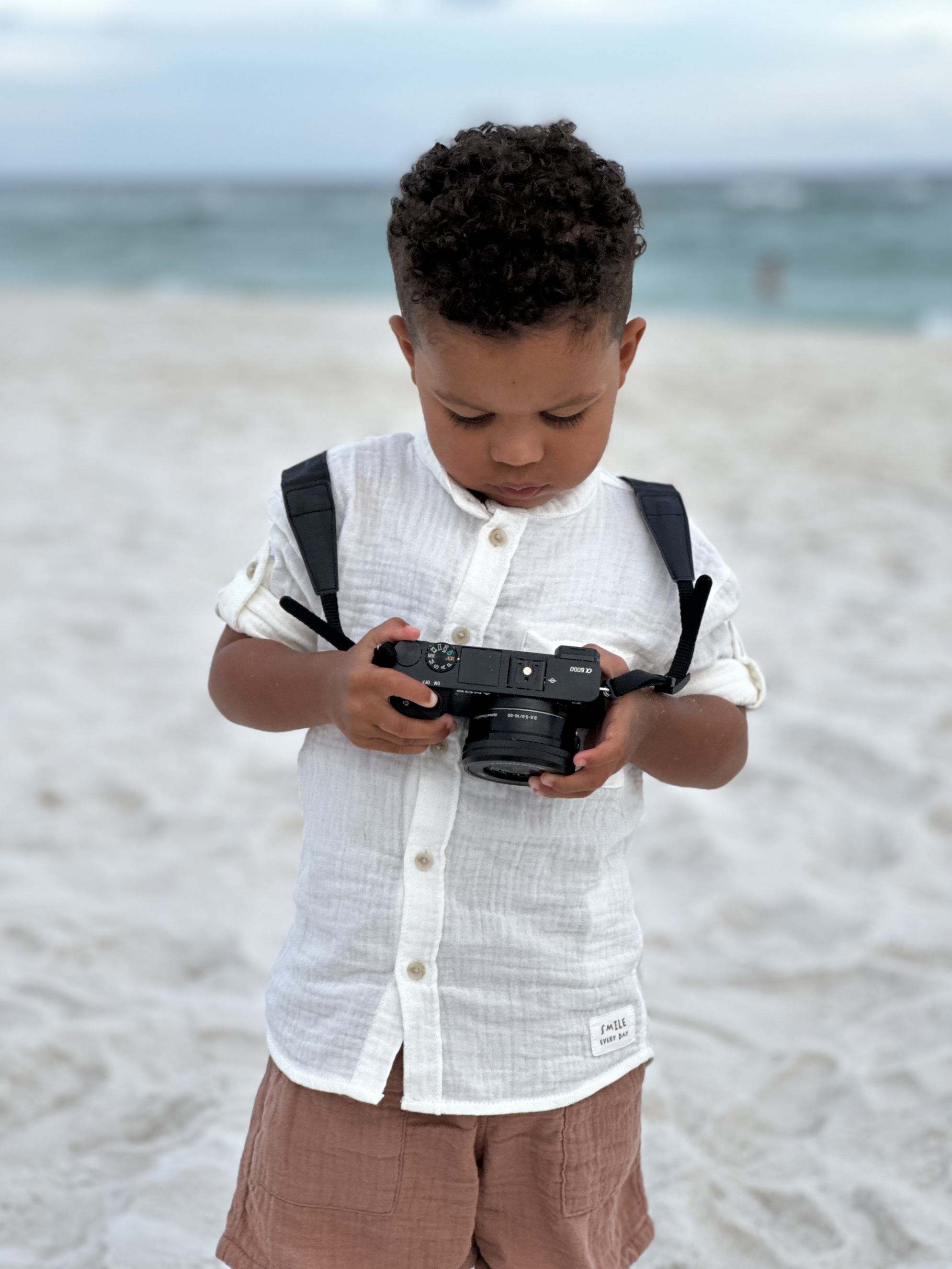
We recently made a family trip to the beach. We have a tradition of going shelling early in the morning. The year before, Rome would say, “Look, a brown shell, a white shell.” This year, he asked, “GrandDan, is that a boy shell or a girl shell?” At night we go crabbing. I brought him a headlamp, and he shined it right in the crabs’ eyes while they did their best to dodge the light. Rome asked, “GrandDan, do all crabs dance?” On our last night, we gathered on the sand for the family sunset picture. Our daughter brought a real camera (not a phone), and Rome was completely captivated by this device. He made it his goal to learn to use it. I happened to be at just the right place at just the right time, and I captured a picture of him on my phone, looking down at the camera with pure wonderment and curiosity.
I had forgotten to remain curious. And to this day, I treasure that lesson from a three-year-old named Rome.
Stay curious. Your best “next” is yet to come.